
Personnel
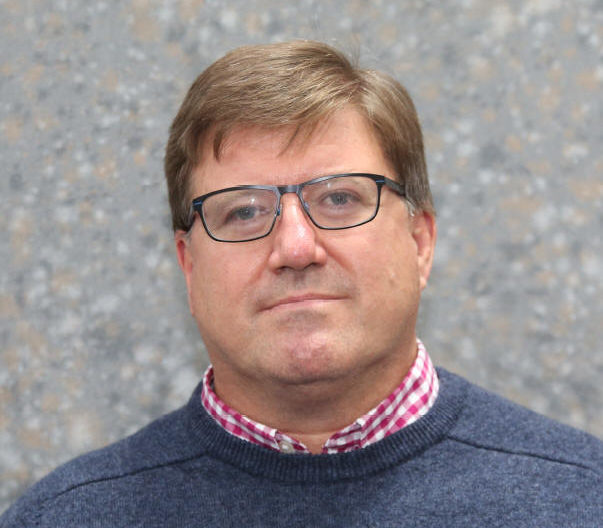
Professor Damian Hampshire
EMAIL: [email protected]
Damian Hampshire is a Professor of Physics at Durham University working on superconductivity in high magnetic fields for MRI, accelerator and fusion energy applications.
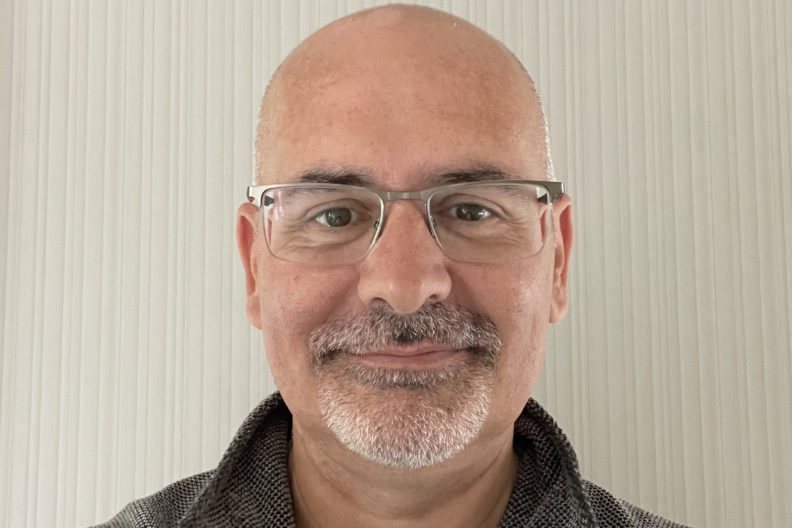
Dr Mark J Raine
EMAIL: [email protected]
Mark is Chief Experimental Officer in the Physics Department and head of the ITER laboratory in Durham. This is the standards laboratory for the European contribution to the International Thermonuclear Experimental Reactor (ITER) project being built in Cadarache, Southern France. In early 2011 Durham University signed a contract with Fusion for Energy (F4E – the Domestic Agency responsible for Europe’s contribution to ITER) to provide characterisation data from seven types of measurement on up to 2000 Nb3Sn superconducting strands earmarked for inclusion in ITER’s toroidal field magnets. Additionally, the laboratory was given responsibility for preparing and measuring Witness samples (used to quality check the heat-treatments of the toroidal field pancake coils) and provide a suite of measurements on NbTi strands being used to make one of the poloidal field coils (PF6). To date, over 13000 measurements have been made. In conjunction with this work for F4E the laboratory has also provided specialist high-field, high-current, measurements on different types of superconductors – including Rutherford cables – to the wider scientific and industrial community.

Professor Rifa AlKhozondar
EMAIL: [email protected]
Rifa is a senior visiting research fellow in the group. She is a computational physicist with world-class experience in the Monte-Carlo Potts modelling of the ripening of grain structures and the atomic diffusive properties near grain boundaries. She is bringing together her expertise with the expertise in Durham in Time-Dependent Ginzburg-Landau theory, to model Josephson-junctions with rough surfaces. In this project, we intend to calculate the ultimate critical current density that superconductors can carry in real systems in high magnetic fields.

Rollo Hutson
EMAIL: [email protected]
Rollo started his experimental PhD in Durham’s Superconductivity Group in Oct 2021, supervised by Professor Damian Hampshire, as part of the EPSRC’s Fusion CDT, having finished a master’s degree in Engineering at Durham University and worked in industry for two years.

Emma Gillard
EMAIL: [email protected]
Emma began her experimental PhD in October 2021 with the Superconductivity Group at Durham University under the supervision of Profs. Damian Hampshire and Elizabeth Bromley. During her PhD she will be part of the EPSRC Centre for Doctoral Training in the Science and Technology of Fusion Energy, based in York. This is a training programme that involves five different universities across the UK and provides general teaching of the physics behind energy generation by fusion.
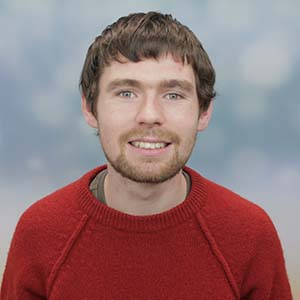
Daniel Scobbie
EMAIL: [email protected]
Daniel began his experimental PhD in the superconductivity group in 2022. His work focuses on the effect of biaxial strains on the critical current density in HTS tapes in high magnetic fields at cryogenic temperatures. This work is of importance for the design of HTS magnets for fusion tokamaks, which experience large complex strains during operation due to high Lorentz forces and differential thermal contractions. Daniel is also a member of the Fusion CDT, which brings together students working on fusion related projects across five UK universities and provides a broad training in the field of nuclear fusion.

Yahya Nasir
EMAIL: [email protected]
Yahya began his PhD in the superconductivity group in 2023. He completed a first class Master’s Dissertation (Level 4) in Physics on the ultimate theoretical limits for the critical current density of superconducting strips. His PhD is computational, studying Time-Dependent-Ginzburg-Landau theory (TDGL) with a view to understanding complexity in geometry .
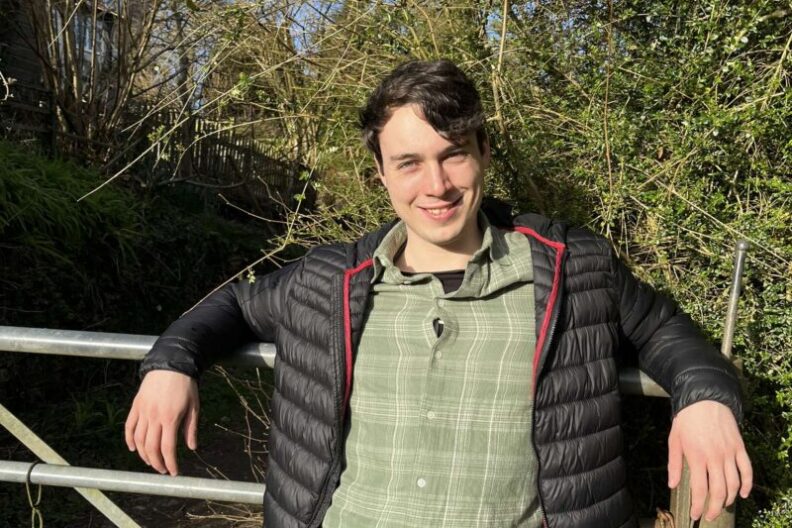
Freddie Daniels
EMAIL: [email protected]
In order to sustain a fusion reaction on earth, the incredibly high temperature plasma must be confined using strong magnetic fields. During my PhD, I will be using computational and analytical techniques to solve the Ginzburg-Landau equations of superconductivity and understand stacked anisotropic HTS materials, attempting to further understand the factors limiting the field strengths and current densities of high and low temperature superconductors.

Sam King
EMAIL: [email protected]
Recent work has demonstrated that the next generation of fusion tokamaks may be most effective at magnetic fields greater than 16 T, raising the need for new superconducting materials that perform well at fields approaching 20 T. In this context, the values of current density in high-field superconductors are typically less than 1% of the theoretical limit, offering a huge opportunity for technological improvement. I am using computational techniques and time-dependent Ginzburg-Landau (TDGL) theory to model the mechanism of flux pinning and the behaviour of flux flow in high-field superconductors to increase their critical current density by a factor of 10 to meet the needs of the next generation of fusion applications.

Warren Smith
EMAIL: [email protected]
I am measuring the critical current density on miniaturised samples of high temperature superconducting (HTS) tapes under extreme strain, varying temperature, varying applied magnetic field and varying field angle. Using miniaturised samples, ~10 to 100 μm in width, facilitates measuring the critical current density of HTS at tokamak temperature (~20K), where the total critical current in a full-scale tape (~ 1 to 12 mm) would be prohibitively large for most research set ups. My aim is is to explore why the measured values of critical current density in state-of-the-art materials in high magnetic fields is typically two to three orders of magnitude smaller than theoretical predictions and to investigate how HTS materials can be optimised for use in commercial fusion reactors.